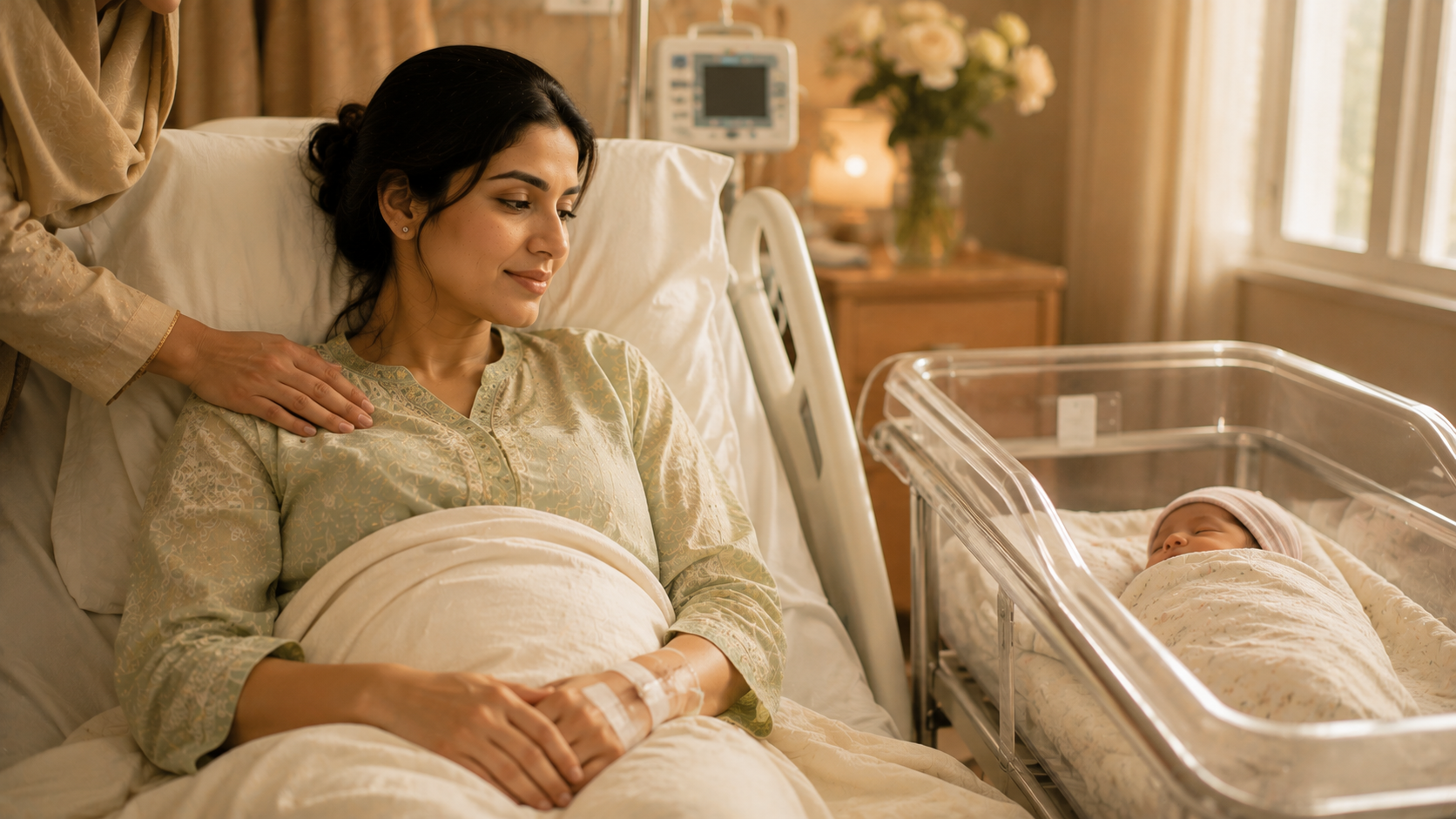
“You had a C-section, so you can’t breastfeed yet. You need to wait until your body recovers.”
Sounds familiar?
This is one of those breastfeeding myths that gets passed from one generation to another—usually with good intentions. Unfortunately, it can create unnecessary fear and may delay breastfeeding unnecessarily.
The truth?
A C-section does not mean you have to wait to breastfeed.
Most mothers who have a Cesarean section (C-section) can begin breastfeeding soon after birth when both mother and baby are medically stable. With the right positioning, pain management, skin-to-skin contact, and breastfeeding support, successful breastfeeding after a C-section is absolutely possible.
The World Health Organization (WHO) recommends supporting mothers to initiate breastfeeding as soon as possible after birth, ideally within the first hour, when circumstances allow.
So, what actually makes breastfeeding after a C-section challenging—and what can help?
Myth: “A C-section mother cannot breastfeed immediately.”
Fact: She often can!
A Cesarean birth is major abdominal surgery. A new mother may be experiencing:
- Abdominal pain and tenderness
- Effects of anesthesia
- IV lines and monitoring
- Fatigue and weakness
- Difficulty sitting or moving
- Fear of putting pressure on the surgical incision
- Difficulty holding and positioning the baby
- Separation from the baby if either mother or baby needs medical care
These challenges can make the first breastfeeding experience more difficult, but they do not make breastfeeding impossible.
If mother and baby are stable, skin-to-skin contact and breastfeeding can often begin soon after birth, according to the hospital's safety protocols.
If immediate breastfeeding is not possible because of anesthesia, maternal complications, or the baby's medical condition, don't panic.
Missing the first hour does not mean breastfeeding has failed.
The important thing is to begin breastfeeding or expressing milk as soon as the mother and baby are medically able.
Why Is Breastfeeding After a C-Section Sometimes Difficult?
Let's be honest—after abdominal surgery, even getting comfortable in bed can feel like a full-time job!
A new mother is recovering physically while simultaneously learning how to care for a newborn.
She may wonder:
“How am I supposed to breastfeed when even sitting hurts?”
This is where practical support becomes extremely important.
The answer isn't:
“Wait until you recover.”
The better approach is:
Support the mother's recovery and support breastfeeding at the same time.
Skin-to-Skin Contact After a C-Section
When medically appropriate, skin-to-skin contact after a C-section should be encouraged as soon as possible.
With appropriate assistance and monitoring, the baby can be placed against the mother's chest. Skin-to-skin contact helps support the baby's temperature regulation and natural feeding behaviours and can encourage early breastfeeding.
A mother recovering from surgery should not be expected to manage this completely by herself.
A nurse, midwife, birth partner, family member, or lactation professional can help position and safely support the baby.
She needs support—not pressure.
“Will My Baby Hurt My C-Section Wound?”
This is one of the biggest concerns mothers have about breastfeeding after Cesarean delivery.
The good news is that several breastfeeding positions can reduce pressure around the surgical incision.
1. Football or Clutch Hold
The baby is positioned beside the mother rather than directly across her abdomen.
This can be particularly useful during the early days after a C-section because it may keep the baby's weight away from the incision.
2. Side-Lying Breastfeeding
Once the mother is medically stable and has appropriate assistance, side-lying breastfeeding may provide a more comfortable option and reduce pressure on the abdomen.
3. Laid-Back Breastfeeding
A supported, semi-reclined position can allow the baby to rest against the mother while reducing direct pressure around the surgical area.
Which Position Is Best?
There isn't one “perfect” breastfeeding position for every C-section mother.
The best position is one that:
- Keeps the mother comfortable
- Protects the surgical area
- Supports the baby's body
- Allows a deep and effective latch
- Helps the baby transfer milk effectively
A lactation consultant can help a mother find a comfortable breastfeeding position after a C-section, especially when pain or limited mobility is making feeding difficult.
“My Milk Hasn't Come In Yet!”
This is another common source of anxiety.
During the first few days, mothers may see only tiny amounts of milk and think:
“I'm not producing enough milk!”
But the first milk is called colostrum, and it is supposed to be produced in small quantities.
Colostrum is concentrated and rich in protective components, while a newborn's stomach is also very small.
So instead of thinking:
“I'm only getting a few drops.”
Think:
“These small amounts of colostrum are exactly what my newborn is designed to receive at this stage.”
Frequent and effective milk removal through breastfeeding or expressing can help establish and maintain milk production.
What If Mother and Baby Are Separated After a C-Section?
Sometimes a mother or baby requires additional medical care after a Cesarean birth.
Temporary separation can understandably be frightening, but it does not mean breastfeeding has to stop.
If direct breastfeeding isn't possible, the mother can be supported to express breast milk according to her individual situation.
Breast stimulation through hand expression or pumping can help maintain milk production while mother and baby are apart.
Once they are reunited, breastfeeding can be established or re-established with appropriate support.
The Secret Ingredient After a C-Section? SUPPORT!
A mother recovering from surgery should not be expected to:
Recover + manage pain + hold the baby + position the baby + breastfeed + entertain visitors + answer everyone's advice
…all at the same time!
Family members can make breastfeeding after a C-section much easier by:
- Bringing the baby to the mother for feeds
- Helping her change positions
- Arranging supportive pillows
- Helping her sit comfortably
- Preparing meals
- Taking care of household tasks
- Protecting her rest
- Encouraging breastfeeding
- Avoiding frightening or discouraging comments
And perhaps most importantly:
Never make a mother feel that having a C-section makes her less capable of breastfeeding.
She has already been through major surgery.
She needs encouragement, practical help, and reassurance.
How Can a Lactation Consultant Help After a C-Section?
Professional lactation support can be especially helpful when breastfeeding feels painful, confusing, or overwhelming after surgery.
A lactation consultant can provide individualized support with:
- Breastfeeding positions after C-section
- Latch and attachment
- Painful breastfeeding
- Milk transfer assessment
- Hand expression
- Breast pump guidance
- Maintaining milk supply after mother-baby separation
- Medically indicated supplementation
- Understanding baby's feeding cues
- Establishing effective milk removal
- Building breastfeeding confidence
Sometimes one correctly demonstrated position is enough for a mother to say:
“Oh! So THAT'S how I'm supposed to hold my baby!”
And suddenly breastfeeding feels much less frightening.
What If I Didn't Breastfeed During the First Hour?
This is important.
If you couldn't breastfeed within the first hour because you were recovering from anesthesia, your baby needed medical care, or circumstances simply didn't allow it—
Please don't blame yourself.
Early initiation of breastfeeding is beneficial, but missing the first hour does not mean you have missed your only opportunity to breastfeed.
When immediate breastfeeding isn't possible, mothers should be supported to start breastfeeding or expressing milk as soon as they are medically able.
Your breastfeeding journey is not decided by one clock.
C-Section Mother? Yes, You Can Breastfeed!
A Cesarean birth may make the beginning of breastfeeding a little more complicated, but complicated does not mean impossible.
With:
- Early skin-to-skin contact when medically appropriate
- Comfortable breastfeeding positions
- Effective latch and milk removal
- Appropriate pain management
- Family support
- Professional lactation guidance
- Reassurance and encouragement
many mothers can successfully establish breastfeeding after a C-section.
So let's replace the old myth:
❌ “You had a C-section, so you cannot breastfeed immediately.”
With:
✅ “You had a C-section, so you may need a little extra support to start breastfeeding comfortably and safely.”
Because sometimes a mother doesn't need someone telling her:
“You can't.”
She simply needs someone knowledgeable beside her saying:
“Let's find a way that works for you.”
Planning a C-Section? Prepare for Breastfeeding Too
If you are planning a Cesarean birth, talk to your obstetric and maternity team about your breastfeeding wishes before delivery.
Ask about:
- Early skin-to-skin contact
- Breastfeeding soon after birth
- Rooming-in
- Support with positioning after surgery
- Pain management that supports breastfeeding
- What to do if mother and baby need temporary separation
You don't have to wait until after surgery to start thinking about breastfeeding.
A little preparation during pregnancy can make those first breastfeeding hours much easier.
And if breastfeeding becomes difficult after your C-section, don't struggle alone.
Early, skilled lactation support can make a meaningful difference.
Remember
A C-section is a way of giving birth—not a reason to give up on breastfeeding.
With the right support, patience, and individualized care, many mothers can begin and continue their breastfeeding journey after a Cesarean birth.
You don't have to do it perfectly.
You don't have to do it alone.
You just need the right support at the right time.